

Quick reply
Definition, mechanics and use cases of the virtual dataroom: mergers and acquisitions, due diligence, fundraising and sensitive audits.


At a time when security and data management have become strategic priorities, many companies are turning to innovative solutions to better manage their sensitive documents. Among these tools, the data room has become an essential standard in critical environments: mergers, acquisitions, audits, fundraising , or even the management of confidential projects.
But what exactly is a data room? How does it work, what is it used for, and above all, why are more and more companies choosing a secure, sovereign VDR (Virtual Data Room)? Let’s take a look.
Data room: definition and origin of the concept
General definition
A data room is a space designed to store, organize, and share securely share confidential information. This may include legal, financial, technical, or HR documents, depending on the project's needs. The primary goal is to centralize this content in a controlled environment, ensuring access is strictly limited to authorized users. With features such as access management, encryption, and audit trails, the data room guarantees a high level of security for all strategic transactions.
Origins in Mergers and Acquisitions (M&A)
Historically, the first data rooms emerged in the context of mergers and acquisitions. Companies involved in these operations needed to provide buyers, investors, or auditors with access to confidential information without compromising its secrecy. At the time, these rooms were physical: they were accessed on-site, often in monitored premises, using paper copies of sensitive documents. While this practice ensured strict access control, it significantly limited the speed and efficiency of the process.
Evolution to the Virtual Data Room (VDR)
With digitalization, these "rooms" transformed into virtual data rooms (or VDRs, for "Virtual Data Room"). Technological advancements have made it possible to replicate (and even exceed) the security guarantees of physical rooms while offering far greater flexibility. Today, a VDR allows for remote file access, featuring enhanced access controls, granular permission management, and full audit trails of all actions taken. It has become a standard tool for companies looking to share sensitive information with external partners or internal stakeholders.

What is a data room used for?
Centralizing confidential documents
The primary purpose of a data room is to consolidateall sensitive files and documents related to a strategic projectwithin a single storage space. This eliminates scattered email attachments, sharing via unsecured platforms, and version control errors. All relevant parties access a centralized, up-to-date version of the files, which improves coordination, reduces the risk of errors, and strengthens the security of shared information.
Facilitating audits and due diligence
In the context of due diligence (an audit prior to fundraising, an acquisition, or a partnership), a virtual data room is essential. It allows auditors to quickly access the necessary documents without the company having to organize multiple manual exchanges. The process becomes smoother, faster, and more secure, with better visibility into access and interactions.
Securing the exchange of sensitive information
Whether for a investment, a restructuring, or a strategic partnership, the security of exchanged information is paramount. A VDR enables the exchange of encrypted data, protected against any leaks or tampering. Implementing restrictions (disabling downloads, temporary access, watermarked viewing) strengthens the company's control over its sensitive content.
What are the features of a virtual data room?
User and access rights management
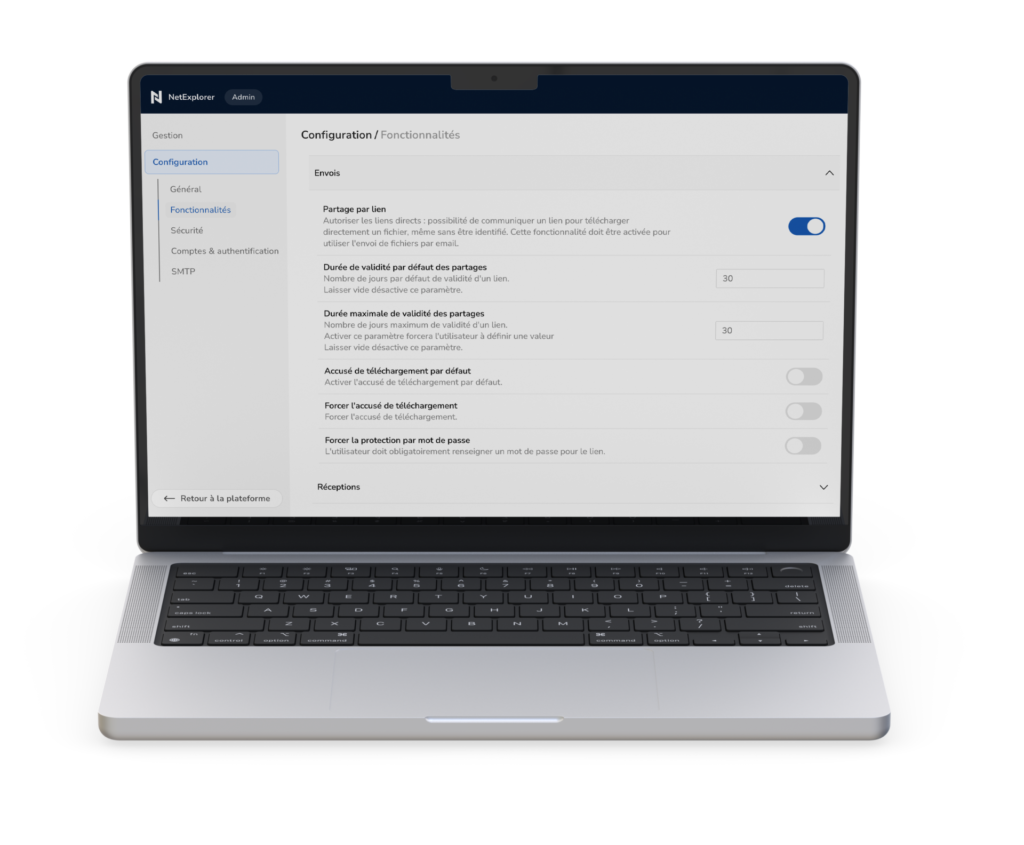
Granular user management is at the heart of a high-performance data room platform. You can assign different access levels based on each person's role: view-only, annotation, downloading, or contribution. These settings help limit exposure of critical information and ensure user accountability.
Action tracking (logs, audit trails)
Every action taken within the room is recorded: documentviewing, downloading, commenting, or deletion. This comprehensive traceability via activity logs or audit trails is essential for understanding who did what, when, and why. It serves as a guarantee of transparency and a source of evidence in the event of a dispute.
Encryption, watermarking, and file protection
To ensure security optimal, the files are encrypted at every level: at rest, in transit, and sometimes even while being read (homomorphic encryption or DLP). Dynamic watermarks can be applied automatically, displaying the user's identity and the date of access to deter leaks. Other features include screenshot blocking or single-download restrictions.
Who uses a data room and for what purposes?
Mergers and acquisitions
data rooms are essential in mergers and acquisitions, where they allow the buyer to access the target company's financial, legal, and operational information. This structured transparency accelerates processes and secures the transaction.
Fundraising and strategic partnerships
Startups, SMEs, and large corporations use VDRs to present their documents to investors, such as business plans, KPIs, and cap tables. It is also a strategic tool for establishing partnerships within a secure and professional environment.
Legal, tax, or real estate audits
Audit and consulting firms use virtual data rooms to conduct quick and structured reviews of large volumes of files. This applies to real estate audits (leases, diagnostics) as well as financial or GDPR audits.
Benefits of a secure data room
Time savings and process efficiency
With a platform for data rooms, all project stakeholders project can collaborate effectively, without wasting time retrieving documents or organizing in-person meetings. Real-time access to information , intelligent search, and conditional access make the entire process much more agile.
Confidential data security
Our data rooms are designed to protect sensitive data within a secure storage space. Thanks to encryption, granular access management, and leak prevention measures (watermarks, logs, restricted access), confidentiality is guaranteed at every stage. A true asset for companies committed to protecting their clients, their services and their reputation.
Regulatory compliance (GDPR, ISO 27001, etc.)
Using a secure dataroom also means ensuring compliance with current regulations. Certifications such as ISO 27001, GDPR compliance, or hosting in France on sovereign clouds allow companies to meet the requirements of public procurement or sensitive sectors.
Why choose a solution like NetExplorer for your dataroom?
Sovereign and secure hosting
NetExplorer, an expert in the French cloud, offers a dataroom service hosted in France in certified data centers, guaranteeing total independence from extraterritorial laws (such as the Cloud Act). Your data remains on national territory, in a environment compliant with the highest standards.
ISO 27001 Certification
Our platform collaboration is ISO 27001certified, the international benchmark for information security management. This certification confirms our ability to protect your sensitive information in a rigorous and documented manner.
Intuitive interface and dedicated support
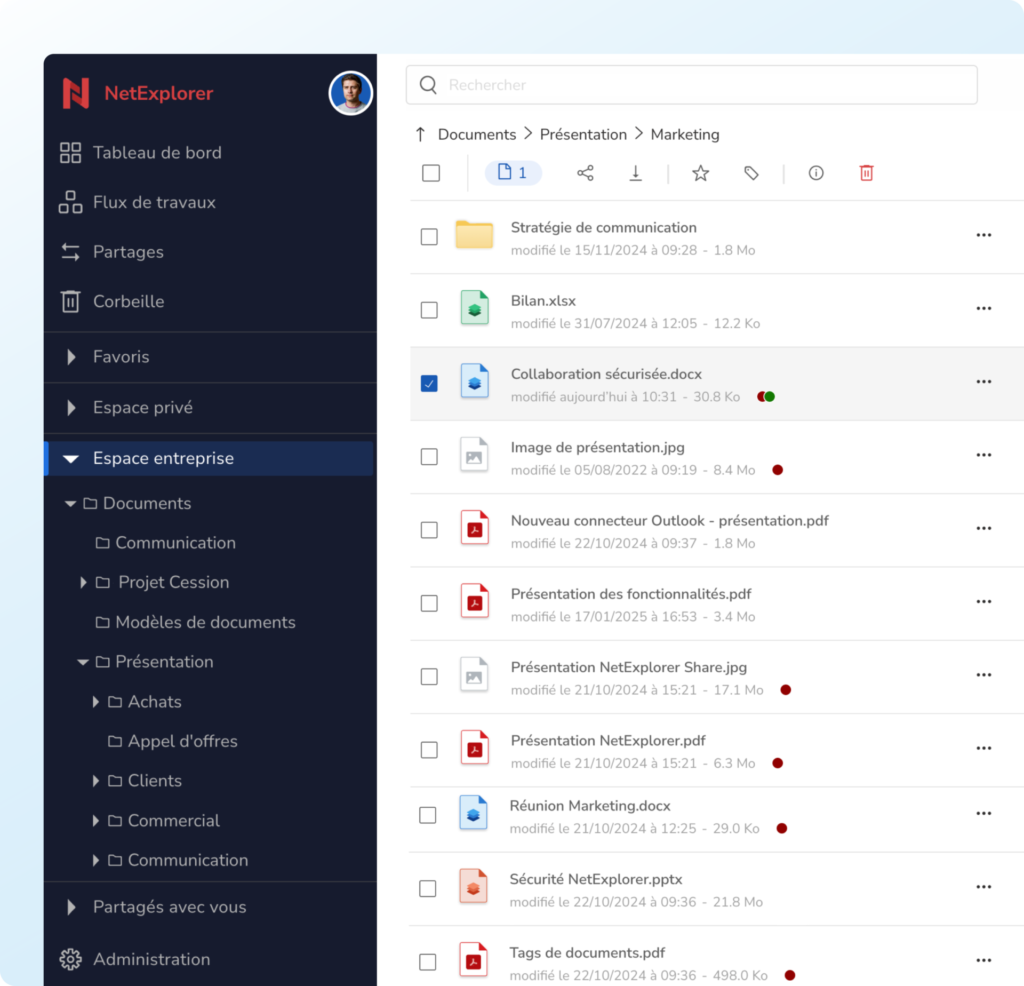
NetExplorer was designed for users, not just IT experts. Our clear and ergonomic interface allows you to deploy a data room in just a few clicks. And if needed, our dedicated support team is there to assist you at every stage of your project, with fast response times and personalized advice.
With NetExplorer, you benefit from:
- A clear interface, free of technical jargon
- Rapid setup for your data rooms
- Responsive support based in France
- Personalized advice tailored to your industry
- Documentation and tutorials for your teams
Receive our monthly updates on cybersecurity, data rooms & sovereign cloud
📬 Want to stay informed about the latest trends in security, data rooms, and best practices for secure file sharing ?
👉 Subscribe to our monthly newsletter to receive our content, tips, and case studies directly in your inbox.
NetExplorer Workspace
The secure collaborative suite for your company files
Share, create, edit, co-author, and review your files with others with ease!
NetExplorer Workspace provides a highly secure environment for storing your company files and collaborating online.
Other articles you might like
NetExplorer vs SharePoint: which solution should you choose to protect your data?
Backup, traceability, sharing, collaboration, electronic signatures and support: a point-by-point comparison of the two platforms.




But let's be honest, our cloud-based file storage and sharing solution is much easier.