

Quick reply
Labour costs, certifications and environmental standards: what explains the price gap, and what local manufacturing gives back in return.



Products made in France are of better quality: that is what the vast majority of French people believe. More than 74% of them say they would pay more for local products. Yet only a third of the goods sold on French soil are made in France. How is that? Are products made in France more expensive? And what is "made in France" actually worth against the competition? Here is the picture.
What is "made in France" worth?
It is no secret that French products cost a little more. Even though they say they are prepared to pay more for French goods, French consumers buy a great many foreign products. According to a survey carried out in 2015, European importers of French capital goods find local products expensive. Because of that, large French retailers prefer to source from abroad to secure bigger margins. Local supply sits between 38% and 54% at Super U, Carrefour, Auchan and Intermarché. At Leclerc, Cora, Casino, Aldi and Monoprix, the figure is between 20% and 25%.
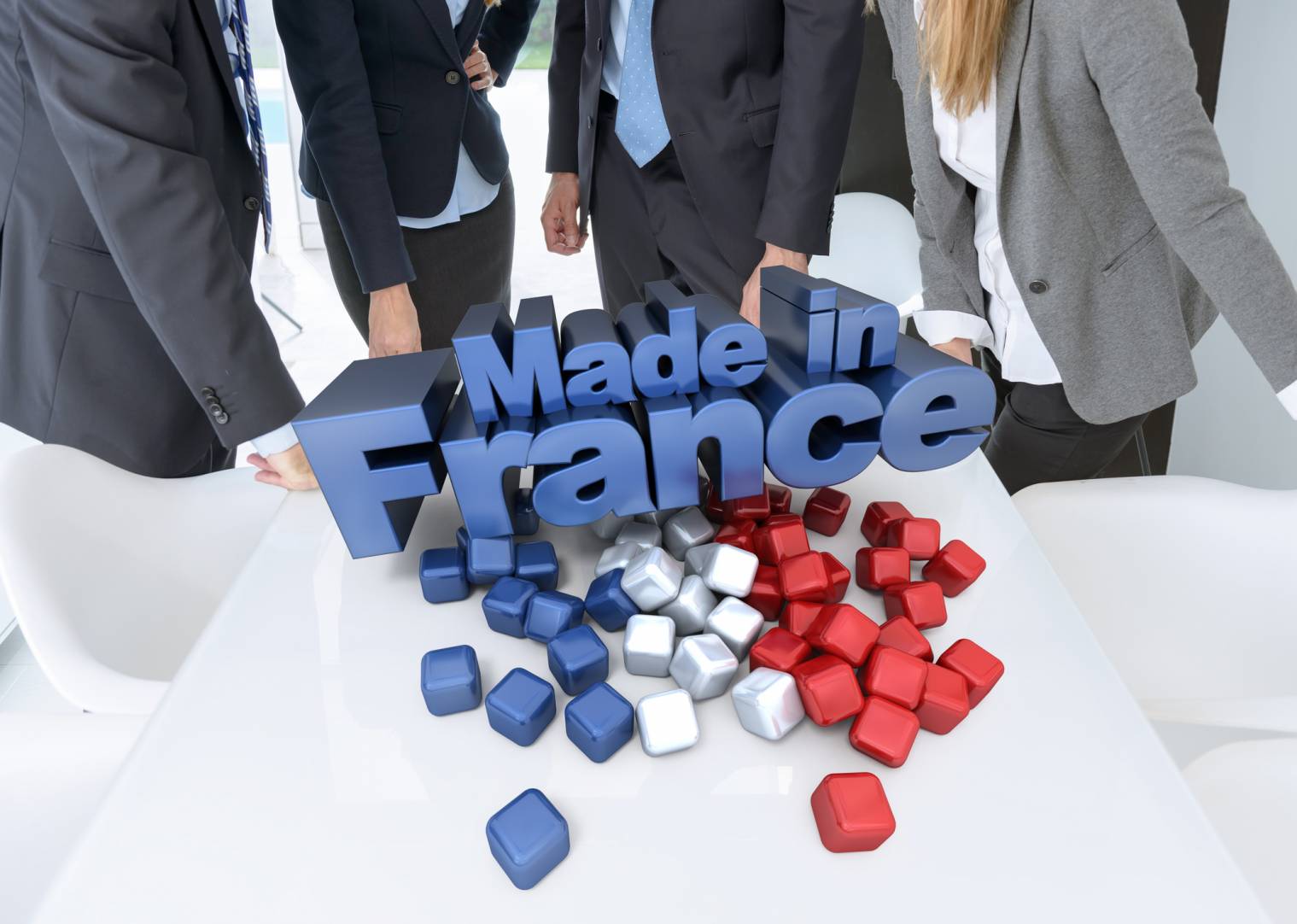
The effect of labour on the cost of goods and services
Labour costs are one of the factors behind the price difference. Production requires raw materials, which are cheaper and easier to obtain in some countries. It also requires workers, and they are not paid the same everywhere. The average monthly salary in France was estimated at 2,238 euros in 2019, against 885 euros in China, 846 euros in Portugal, 391 euros in India and 260 euros in Indonesia. In short, labour costs are high in France, where local companies compete more on quality. That is why many companies prefer to produce in China or in other countries where labour is cheap.
A French company is estimated to make a margin of between 100% and 200%. Put simply, for a production cost of 100 euros, a French business will sell its product at 200 or 300 euros. A business producing in China or Indonesia, meanwhile, can make a margin of between 400% and 500%, and its production costs stay very low: perhaps 40 euros for an item sold at 400 euros.
The cost of certifications plays a part too
To meet the expectations of an increasingly demanding public, "made in France" often goes hand in hand with obtaining a number of certifications. Those come at a cost that is far from negligible, on top of the other expenses service providers have to carry. To offer professionals and companies a high-quality IT environment, for instance, NetExplorer, a leader in the private cloud made in France, has obtained ISO 27001, ISO 9001 and HDS certification. The digital files stored on our platform are therefore highly secure, and we can guarantee an SLA of 99.9%.
French products: expensive, but only relatively
The cost of French products does need putting in perspective, though. First, because "made in France" generates revenue and creates local jobs. According to figures from INSEE, France's national statistics institute, the textile sector made in France represents close to 40,000 jobs and around 7.2 billion euros of turnover a year. French consumers are well aware of it: 93% of the population believes buying local products supports jobs and industry.
Working conditions in France are also far better than in many other countries. The working week is 35 hours, against 40 in Indonesia and Portugal, 44 hours in China and 48 hours in India. As noted above, pay is better in France too.
A smaller environmental footprint
The great majority of French people (84%) believe buying local products helps protect the environment. Those goods have a smaller carbon footprint than ones made in other countries.
A product made in France travels fewer kilometres to reach the consumer than one coming from the other side of the world, so carbon dioxide emissions are considerably lower.
The strict environmental standards French industry follows also reduce pollution considerably compared with other countries. It is estimated, for instance, that 70% of waterways in China are polluted by toxic waste from the textile industry.

"Made in France" gives local products their value
Some French products are highly prized abroad: cognac, champagne and perfume among them. Close to 206 million bottles of cognac were sold abroad in 2017, for a turnover of 3.2 billion euros (figures from the Bureau national interprofessionnel du Cognac). Statistics also show that more than 30 million bottles of Moët champagne crossed the border. Lancôme's "La vie est belle", from the French group L'Oréal, remained one of the best-selling perfumes on the international market in 2017.
Other products, such as French-built sailing boats, are also much appreciated abroad. Between 2013 and 2014, turnover in that sector reached 535 million euros. And since its launch in 1950, the famous BIC pen has sold more than 100 billion units, giving the French group a turnover of 1.9 billion euros. 45% of those sales were made in North America. In textiles, France is known worldwide for quality and luxury goods, and Paris is regarded as the capital of fashion.
French products have potential and export well. In 2015, clothing exports represented a turnover of 8.8 billion euros. Exports of textiles, mechanical equipment and transport equipment to Germany generated a record 67.5 billion euros.
"Made in France": a mark of quality and of standards met
For 92% of French people, local products are of good quality. 87% of them believe goods made in France are produced under conditions that are socially respectful of workers. France places particular emphasis on meeting standards and on consumer safety. Most products made on French soil carry labels representing product quality, among them:
- AOC (protected designation of origin);
- PGI (protected geographical indication);
- the TSG label (traditional speciality guaranteed);
- the Label Rouge.
What stands out is that products made in France are of superior quality. They are produced under good working conditions and their carbon footprint is small. But quality has a price, which is why many consumers prefer the cheaper foreign products flooding the local market. Buying goods made locally is nonetheless a worthwhile way of contributing to the national economy. That holds just as true in the digital sector, where a number of French players such as NetExplorer offer quality services that meet the standards.
Other articles you might like
French sovereign cloud: secure hosting and storage in France
What sets a sovereign cloud apart from AWS or Azure, why the Cloud Act changes the picture and how to start migrating your IT.



But let's be honest, our cloud-based file storage and sharing solution is much easier.