

Quick reply
What a data centre actually looks like, how it runs around the clock, and the physical and network measures that keep it secure.
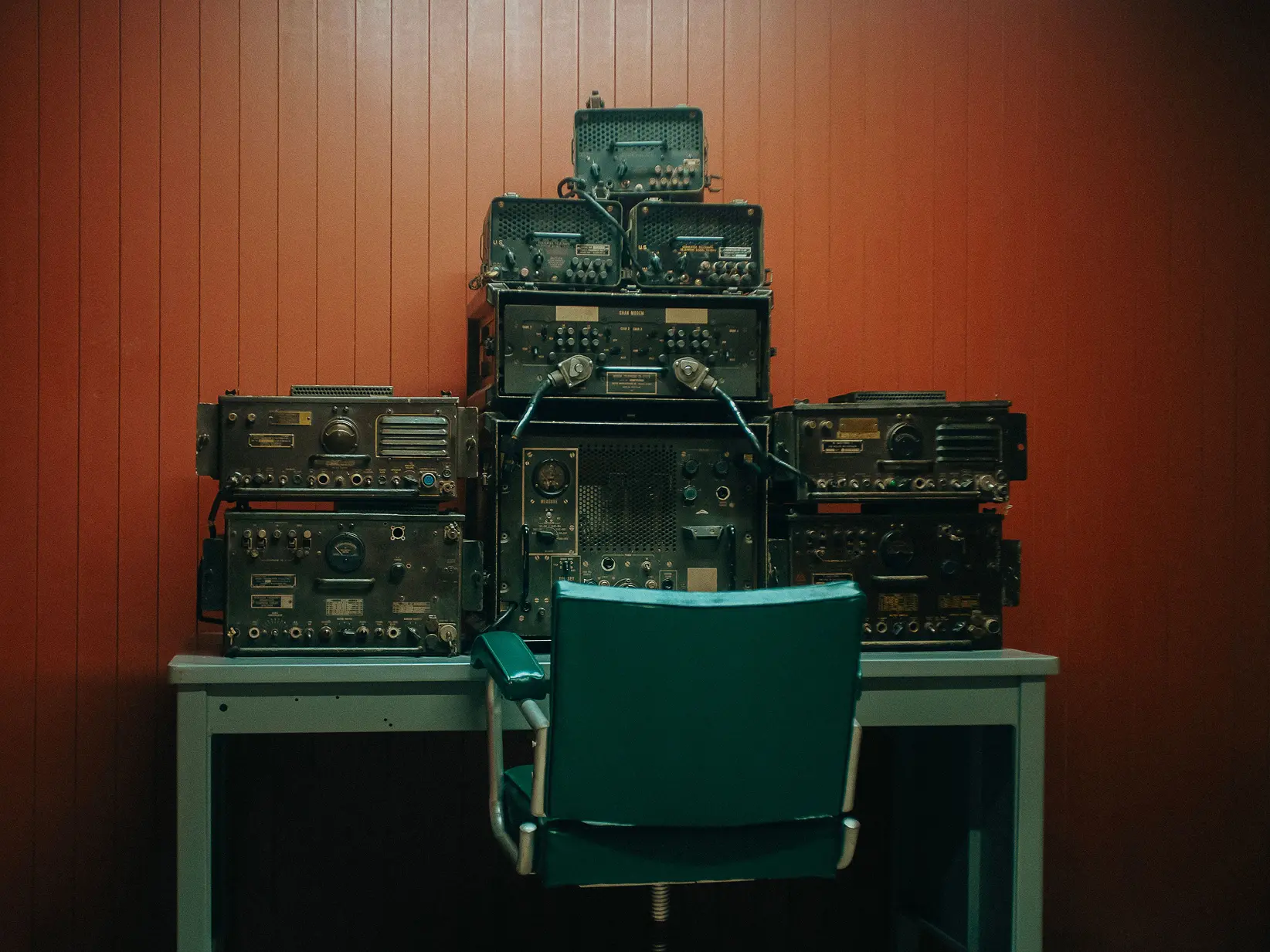


Also known as a computing centre, a data centre is a physical site housing networked computers where data is processed, transmitted and stored. Data centres are an integral part of our increasingly connected lives. In the United States, the growth of hyperscale data centres is chiefly down to the technology giants: Amazon, Google and Facebook.
What is a data centre?
Have you ever wondered how a cloud hosting service actually works? Data is stored in facilities like these. The technical equipment in a data centre consists of servers, routers and storage devices. It hosts a phenomenal quantity of web browsing data, but also provides secure hosting for particular organisations:
- companies
- financial institutions
- telecommunications firms
- social networks
- online storage services
- email providers, and others
Why use a data centre? These facilities are essential to delivering online services. The data generated has to be stored somewhere, and its sheer volume does not always allow for storing it in-house. It is worth noting that hosting in a data centre also costs less than building your own. You can rent servers in colocation, or rent your own server from an IT host to store that data.
In return, the data centres run by those hosts have to guarantee that the data entrusted to them stays available, secure and confidential. Their clients' credibility and reputation are at stake.
How does a data centre work?
A data centre is packed with technology. A server is a supercomputer with enormous storage capacity, plenty of memory and powerful processors. How a data centre works revolves around a network of servers and the equipment needed to keep them running properly.
Controlling the environment is essential to keeping all that equipment working. Thermal engineering plays a central part in managing the heat generated by the technical and computing estate, so that the infrastructure does not suffer for it. A cooling system keeps the temperature steady at around 20°C. Air quality also has to be maintained, so that dust does not work its way into the data centre. Humidity, another enemy of facilities like these, has to be kept as low as possible.
A data centre is never powered down: it runs 24 hours a day, every day of the year, without interruption. Any problem has to be dealt with immediately, whether it is a breakdown, a power cut or damage caused by a disaster. These facilities consume a great deal of energy and absolutely must have backup or emergency power in place.

Securing a data centre
That means securing the site and its equipment physically, as well as securing the data stored there.
Physical security of the data centre
The level of physical security in a facility of this kind depends on its size. The servers in a small private data centre may be kept in cabinets closed with a mechanical lock. Larger clusters call for other measures.
Data centres of that size are monitored 24 hours a day. Security staff are on site permanently, supported by continuous electronic and video surveillance to protect the facility from anyone with bad intentions. Access to the servers, the heart of the data centre, is controlled by secure entry (sometimes biometric): only authorised people can get in.
The data centre is also protected against fire by a chemical suppression system. That is preferred to water sprinklers or any other arrangement involving moisture, in order to minimise the damage done to technical and computing equipment.
Data and network security
Network engineers are essential for dealing with server or hardware failures, and for maintaining a consistent quality of service. They can be physically present, though more and more companies opt for virtualisation, which allows control even from a distance. Specific software makes it possible to carry out operations remotely, but an IT manager is generally on hand to anticipate any problem.
Security patches, firewalls, reverse proxies, load balancers and anti-virus software are all in place to protect the facility from cyberattacks and data breaches. That protection is critical, because an intrusion and the capture of data can cost a company dearly, financially as much as reputationally. Beyond their own data, their clients' information is sensitive data too.
Data is also backed up several times in several different places. That way, if the data centre is compromised, the backup means the data is not lost. Data retention also makes it possible to recover files after an accidental deletion.
NetExplorer in France
NetExplorer has two data centres in France: a primary Tier 4 facility (Equinix) and a secondary Tier 3+ one (Zeya), both in the Paris region. Because the data is stored on French soil, it falls under French and European law (GDPR). Certified ISO 9001 and ISO 27001, these data centres guarantee you 99.9% availability and 60 Gbps of internal routing for internet transit. NetExplorer offers several tiers of service to match what you need.
Both are fitted with a high-performance network to guarantee very high download speeds. All data is duplicated in real time, across at least 3 media on these two sites, so that it lasts. It is backed up in a private cloud to guarantee maximum security. The sites are secured permanently through physical and video surveillance.
If you would like to store your data outside France for faster access, we also have high-end data centres in Switzerland and Luxembourg.
Other articles you might like
What is a data room?
Definition, mechanics and use cases of the virtual dataroom: mergers and acquisitions, due diligence, fundraising and sensitive audits.



But let's be honest, our cloud-based file storage and sharing solution is much easier.